notes:
- plot with d3 library and python
- worth opening in another tab since it’s pretty big, not best rendered here
- this is a static export (svg), but i make use of this in an interactive html version… not sure how to add it here yet
- tbd! XXX
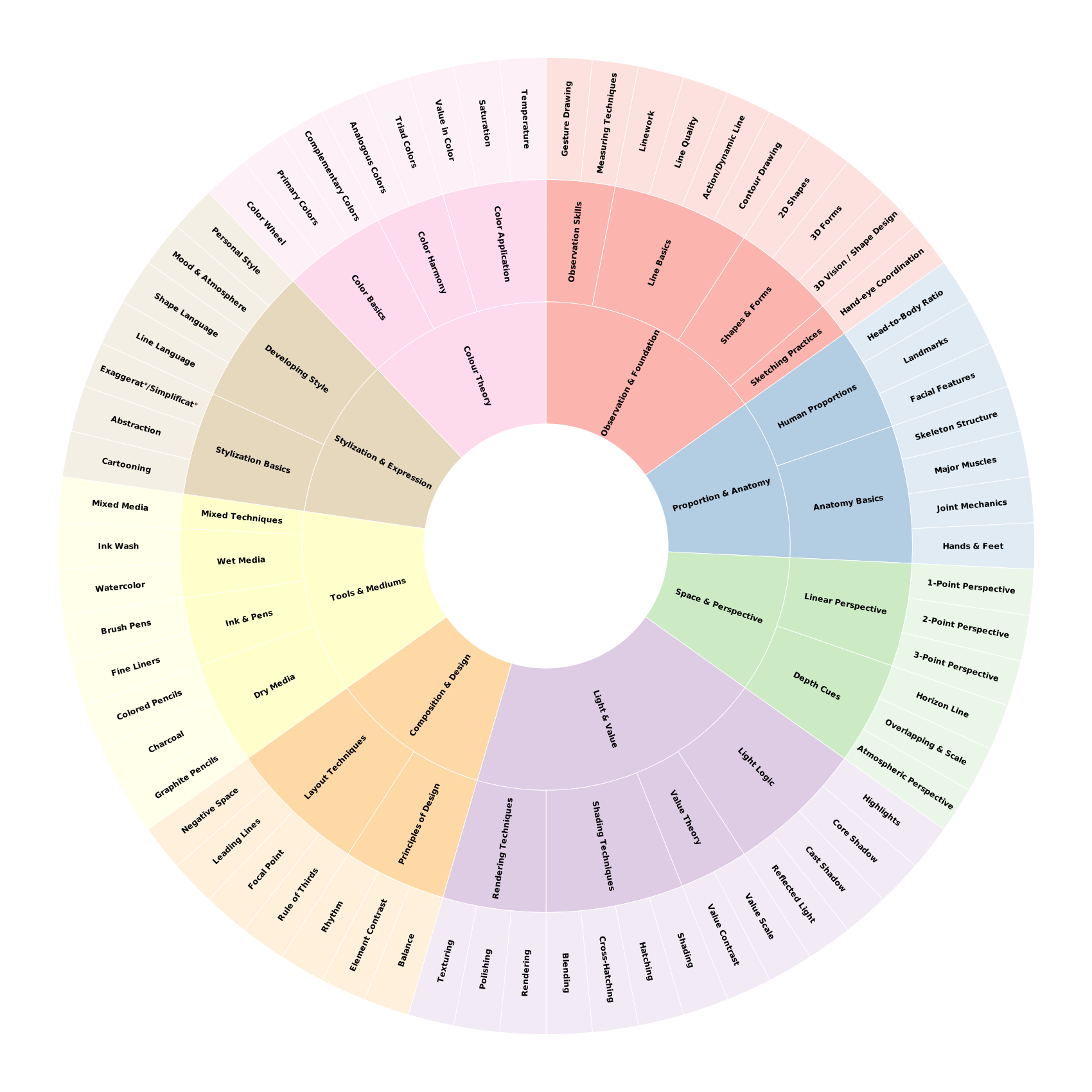
Observation & Foundation
➤ Line Basics
- Linework: Make clean distinct clear line stroke.
- Line Quality: Variation in line weight to show depth or energy.
- Action/Dynamic Line: A single flowing line capturing the pose’s energy.
- Contour Drawing: Outlining the edge of a form without lifting the pencil.
➤ Observation & Foundation
- Observation Skills: Learning to see accurately by drawing what you observe, not what you think you see.
- Line Basics: Exploring different types of lines to express movement, weight, and shape.
- Shapes & Forms: Understanding 2D shapes and how they build 3D forms; a basis for everything you draw.
- Sketching Practices: Daily drawing habits, visual journaling, and loose sketching to improve fluidity and confidence.
➤ Observation Skills
- Gesture Drawing: Quick sketches capturing motion(movement), flow and posture rather than details.
- Measuring Techniques: Using tools or reference points to gauge size and angle.
➤ Shapes & Forms
- 2D Shapes: Basic flat shapes like circles, squares, and triangles.
- 3D Forms: Solid shapes like cubes, cylinders, and spheres.
- 3D Vision / Shape Design: From the basic shapes and forms, expand to the 3D space as a whole (=‘baby of Perspective’).
➤ Sketching Practices
- Hand-eye Coordination: Translate what you see onto the canvas accurately.
Proportion & Anatomy
➤ Anatomy Basics
- Skeleton Structure: The underlying bone structure that supports the form.
- Major Muscles: Muscle groups that define the body’s surface shape.
- Joint Mechanics: How body parts bend and connect in motion.
- Hands & Feet: Studying challenging body parts through simplified shapes and observation.
➤ Human Proportions
- Head-to-Body Ratio: Standard measurements used to size the human figure.
- Landmarks: Fixed body points used to map accurate proportions.
- Facial Features: Focusing on heads, faces, and expressions to add personality and accuracy.
➤ Proportion & Anatomy
- Human Proportions: Learning the relative sizes and placement of body parts in a standing pose.
- Anatomy Basics: Studying muscles and bones to understand how the body moves and bends.
Space & Perspective
➤ Depth Cues
- Horizon Line: Eye-level reference where sky meets ground.
- Overlapping & Scale: Using size and position to suggest depth and distance.
- Atmospheric Perspective: Fading color or contrast to show distance.
➤ Linear Perspective
- 1-Point Perspective: All lines converge to a single vanishing point.
- 2-Point Perspective: Lines converge to two points for angled views.
- 3-Point Perspective: Adds height and dramatic angle with a third point.
➤ Space & Perspective
- Linear Perspective: Using 1, 2, or 3 vanishing points to draw forms in space accurately.
- Depth Cues: Techniques to create a sense of space in drawings.
Light & Value
➤ Light & Value
- Light Logic: Understanding how light interacts with surfaces to produce highlights and shadows.
- Value Theory: A gradient from dark to light used to represent shadow and illumination.
- Shading Techniques: Applying values to suggest form and depth.
- Rendering Techniques: The process of adding light, shadow, and detail to create a realistic or finished look
➤ Light Logic
- Highlights: Bright areas where light hits directly.
- Core Shadow: The darkest part of the form’s shadow.
- Cast Shadow: Shadow cast by an object onto another surface.
- Reflected Light: Light bouncing off nearby surfaces.
➤ Rendering Techniques
- Rendering: Finishing a drawing with detail and value.
- Polishing: Smoothing and refining the final touches.
- Texturing: Adding visual or tactile surface details.
➤ Shading Techniques
- Shading: Using value to show form and depth.
- Hatching: Lines placed in one direction to create shading.
- Cross-Hatching: Criss-cross lines to build up value.
- Blending: Softening transitions between values.
➤ Value Theory
- Value Scale: A range from dark to light values.
- Value Contrast: The difference between light and dark areas.
Composition & Design
➤ Composition & Design
- Principles of Design: Guidelines for arranging elements in a visually pleasing way.
- Layout Techniques: Practical tools for arranging visuals and guiding the eye.
➤ Layout Techniques
- Rule of Thirds: Dividing space into thirds to place elements of interest off-center.
- Focal Point: Where you want the viewer to look first.
- Leading Lines: Lines in a composition that guide the viewer’s gaze.
- Negative Space: Empty space around the subject to define shape.
➤ Principles of Design
- Balance: Even distribution of visual weight in a drawing.
- Element Contrast: Difference in elements to create visual interest.
- Rhythm: Repeated elements that guide the viewer’s eye.
Tools & Mediums
➤ Dry Media
- Graphite Pencils: Versatile pencils for sketching and shading.
- Charcoal: Soft, dark medium for expressive marks.
- Colored Pencils: Pigmented pencils for layering and detail.
➤ Ink & Pens
- Fine Liners: Precise pens for outlines and detail.
- Brush Pens: Flexible tips for dynamic lines and fills.
➤ Mixed Techniques
- Mixed Media: Combining materials for varied texture and effect.
➤ Tools & Mediums
- Dry Media: Tools like pencils and charcoal for line and shading.
- Ink & Pens: Inking tools used for outlines and expressive marks.
- Wet Media: Paints and liquid tools for washes and layering.
- Mixed Techniques: Combining tools and materials for variety.
➤ Wet Media
- Watercolor: Transparent paint great for soft layering.
- Ink Wash: Diluted ink used for tone and atmosphere.
Stylization & Expression
➤ Developing Style
- Line Language: How your line choices express personality.
- Shape Language: Using shapes to suggest character or mood.
- Mood & Atmosphere: Conveying emotion and tone through style, value, and composition.
- Personal Style: A consistent, recognizable way of drawing.
➤ Stylization & Expression
- Stylization Basics: Simplifying or exaggerating form for clarity or emotion.
- Developing Style: Exploring how to express your unique visual language.
➤ Stylization Basics
- Cartooning: Simplified, expressive drawing with clear shapes.
- Abstraction: Reducing realism to emphasize mood, emotion, or design.
- Exaggerat°/Simplificat°: Altering proportions or features to enhance storytelling or clarity.
Colour Theory
➤ Color Basics
- Color Wheel: The basic structure of primary, secondary, and tertiary colors.
- Primary Colors: Red, yellow, and blue — can’t be made by mixing.
- Complementary Colors: Colors opposite on the wheel that enhance contrast.
➤ Color Harmony
- Analogous Colors: Colors next to each other for smooth harmony.
- Triad Colors: Three evenly spaced colors on the wheel.
➤ Colour Theory
- Color Basics: Foundational knowledge of colors and how they relate.
- Color Harmony: Using color groupings that are pleasing together.
- Color Application: Using color to create mood, focus, and realism.
➤ Color Application
- Value in Color: Lightness or darkness of a color.
- Saturation: Intensity or dullness of a color.
- Temperature: Warm or cool feeling of a color.